
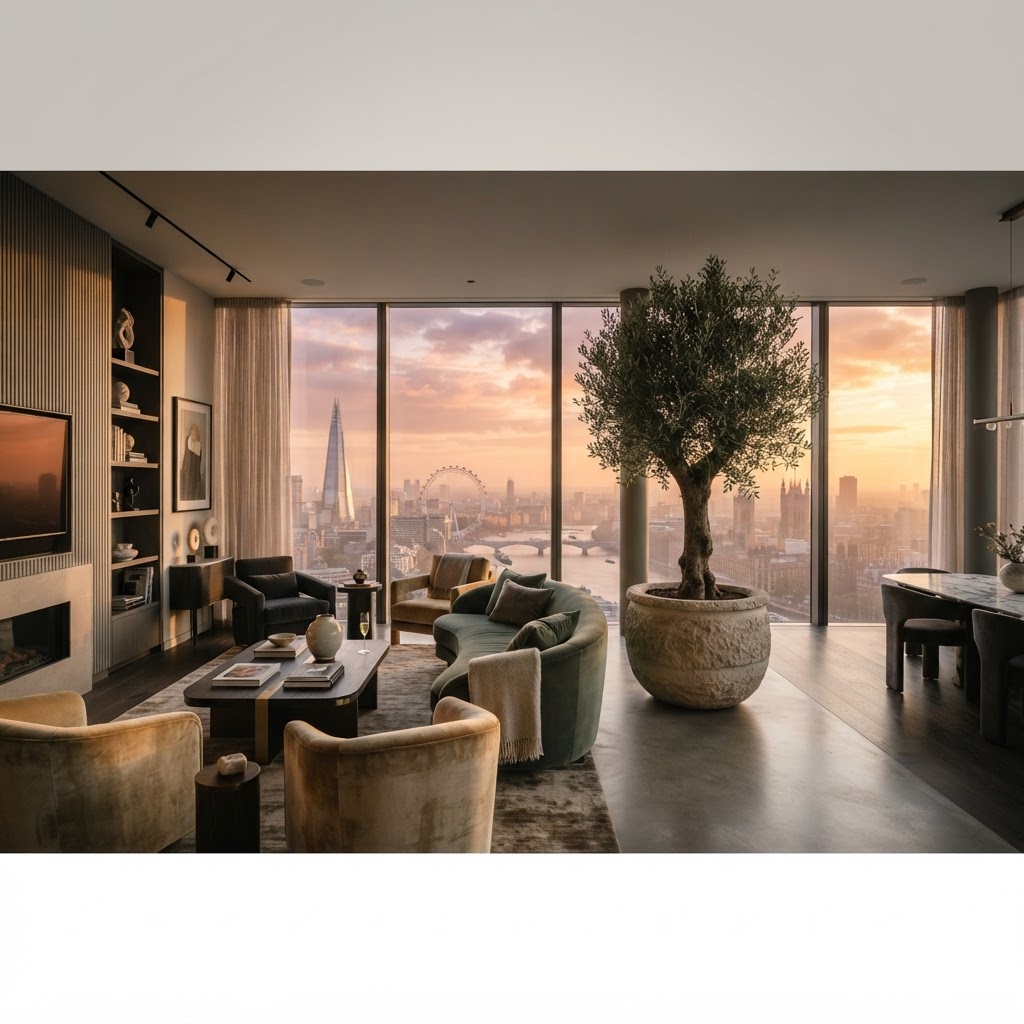
In the quiet, cobblestoned corridors of Chelsea and the sweeping, gold-leafed vistas of Knightsbridge, a subtle yet seismic shift is reshaping the very definition of the luxury home. For decades, the pinnacle of London property was defined by architectural heritage—the grand proportions of a Grade II-listed townhouse or the dizzying views from a minimalist penthouse. Today, however, the ultra-prime market is entering an era where heritage meets radical, sustainable ingenuity.
The Biophilic Revolution
As the modern HNW individual prioritizes wellness as the ultimate currency, architects are moving away from the cold, glass-and-steel aesthetic of the early 2010s. Leading firms like Foster + Partners and Studio Ashby are championing 'biophilic luxury,' integrating nature not as an accessory, but as the foundation of the design narrative. We are seeing expansive internal glass atriums that house mature olive trees, and vertical gardens that purify the air in Belgravia apartments, effectively bringing the serenity of a country estate into the heart of the capital.
The future of luxury real estate is not in how much gold you can display, but in how seamlessly your home can breathe with the changing seasons, argues Julian Hennessey, a senior analyst at Knight Frank.
Craftsmanship as a Living Legacy
The contemporary residence is becoming a gallery of bespoke curation. Clients are moving away from off-the-shelf high-end furniture, choosing instead to commission artisans. Think hand-forged bronze fixtures by L’Objet, or stone-carved kitchen islands hewn from rare, ethically sourced marble sourced by artisans in Carrara specifically for a client’s Chelsea townhouse. These homes are no longer just assets; they are sculptural expressions of personal history, utilizing sustainable, heritage materials that gain character over generations.
The Reimagined Country Estate
Beyond London, the luxury market is seeing a reimagining of the grand English estate. Once vast, drafty, and difficult to manage, these historic properties are being retrofitted with invisible technology. Savills reports an increase in 'smart-invisible' tech, where climate control, security, and lighting are managed by AI that learns the inhabitant’s rhythm, yet remains entirely hidden behind wood-paneled walls and bespoke cabinetry. It is the marriage of 18th-century grandeur with 21st-century intuitive living.
The Final Verdict
As we look toward 2027, the home is no longer a static trophy. It is a regenerative sanctuary that prioritizes the mental and physical wellbeing of its inhabitants. Whether it is an expansive penthouse overlooking Hyde Park or a meticulously restored townhouse in the Royal Borough, the new direction of luxury is one of profound, thoughtful, and quiet excellence.