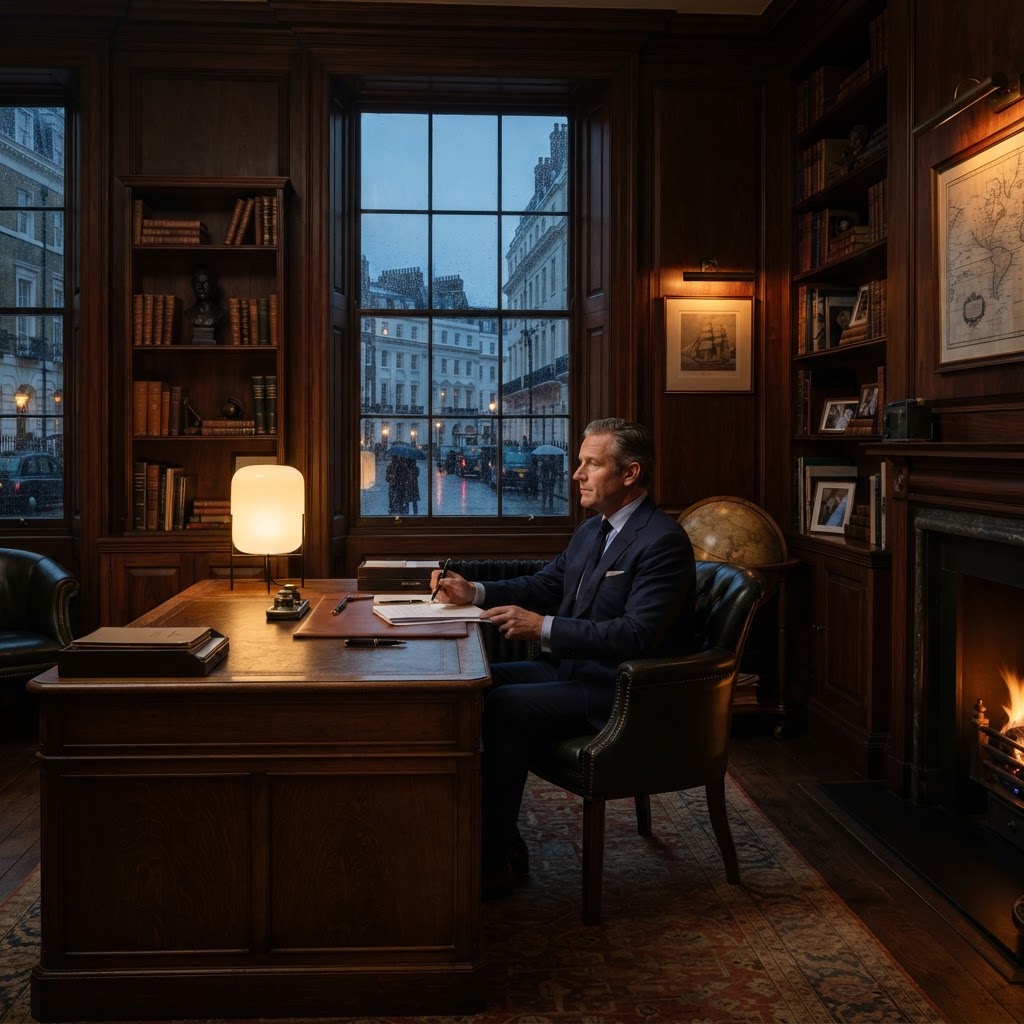
In the quiet, wood-paneled corridors of Mayfair family offices, a tectonic shift is underway. For the modern ultra-high-net-worth (UHNW) individual, the traditional 60/40 portfolio—that gilded cage of public equities and fixed income—is increasingly viewed as a relic of a bygone financial era. As volatility becomes the market's only constant, the world's most sophisticated investors are turning toward the bespoke, the tangible, and the illiquid.
The Ascent of Direct Private Capital
Today’s wealth creators are not merely passive investors; they are active architects of their own enterprise ecosystems. According to Marcus Vane, managing director of a premier private bank overlooking St. James’s Square, "The focus has pivoted toward 'Alpha-seeking' capital. My clients no longer want to participate in the broader market indices; they want to hold a controlling interest in the innovation cycle itself." This manifests in a surge of direct private equity investments, often bypassing traditional venture funds to take majority stakes in growth-stage firms specializing in bio-technology, high-end sustainable hospitality, or disruptive fintech.
The Tangible Sanctuary: Passion Assets as Strategy
While venture capital builds the future, luxury assets remain the bedrock of dynastic preservation. In the elite circles of Monaco and Knightsbridge, watches are no longer mere timepieces, and wine is no longer merely liquid. A Patek Philippe grand complication or a vertical collection of Château Mouton Rothschild is now treated with the same rigorous due diligence as a private equity term sheet. These are not just prestige symbols; they are liquidity buffers that offer a compelling hedge against fiat currency erosion, often outperforming the S&P 500 in long-term capital appreciation.
True wealth is not measured by the speed of one’s returns, but by the resilience of one’s legacy in the face of global uncertainty.
We are observing a maturation in the 'passion asset' market. Where once there was amateur enthusiasm, there is now institutional-grade data. Family offices are employing dedicated curators and art advisors—professionals formerly sequestered in auction houses—to manage portfolios that look more like a museum collection than a brokerage account. This is the new 'intellectual capital' of investment: the ability to identify value in the rare, the exquisite, and the irreplaceable.
The Concierge-Led Investment Model
The lines between lifestyle and investment are blurring. High-end hospitality investments, such as boutique luxury resorts in the Maldives or exclusive private members' clubs in London, serve a dual purpose: they are high-yielding cash flow assets that provide unique utility to the investor’s personal lifestyle. When a family office acquires a luxury property in the Swiss Alps, they are buying a destination for generations, while simultaneously capturing the premium yield of the ultra-luxury hospitality sector.
As we navigate the latter half of this decade, the message is clear: the elite investor has moved beyond the spreadsheet. They are seeking alignment with their values, their passions, and their long-term vision for their families. Whether it is through a direct investment in a luxury maison or the acquisition of a rare vineyard, the goal is total control over the asset's trajectory. In this climate, the most successful investors are not those who play the market, but those who build their own.